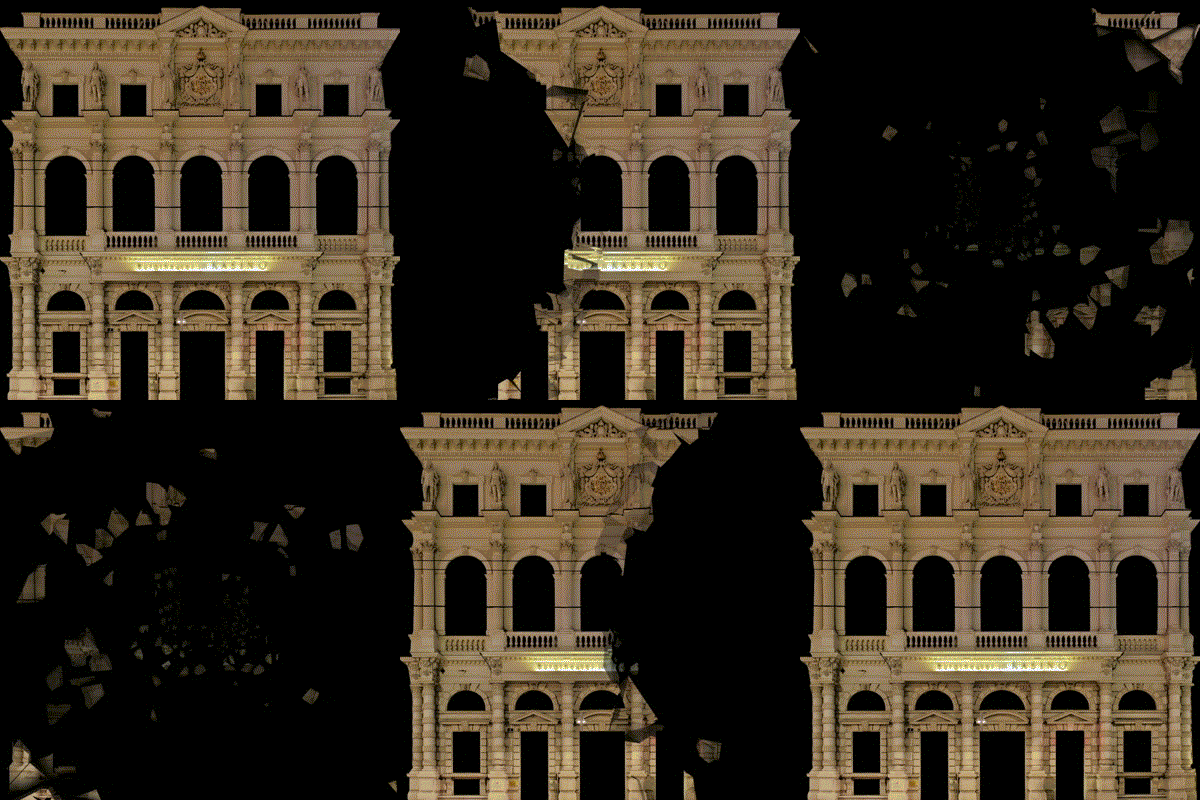
Written by Stavros Didakis, Professor, NYU Shanghai.
Media facades is a term used to describe architectural exteriors that utilize various forms of media devices and technologies to display (audio)visual content that is needed for a range of aesthetic, functional, or advertising reasons. In most of the cases the technologies used are LED panels, video projections, or lighting fixtures, and depending on the purpose the building's owners want to attribute to the facade, engineers, designers, and artists work together to accomplish the needed task. Besides the functional or practical applications we may have (i.e. displaying advertisements or public announcements), there are many other cases where high level of creativity and expression is demonstrated that captures successfully public's attention, showing an alternative version of the architectural normality (i.e. static/unaltered). Below, there are a few selected examples that explain multidisciplinary practices utilized for media facades.
The architectural "skin" becomes important in communicating information. Patterns carved on stone, marble, plaster, and so on, are usually sophisticated crafts that connect with citizens and inhabitants on a certain cultural, political, economic, or emotional level. The magnificent facades found on middle ages cathedrals, for example, are exquisite samples of visual narratives frozen in time. With the use of recent forms of media, facades can now display a wider range of compositional properties that do not have to be static, but to utilize the time domain for larger audience engagement and participation, quite often. The possibilities to communicate information, emotion, human expression, and anything seemingly possible, can exponentially increase.
The following example displays BIX, a renowned media facade in Kunsthaus in Graz, which engulfs a fascinating architectural structure designed by architect Peter Cook - the founder of the most radical architectural group of the 20th century, Archigram. The building uses large lighting tubes that are controlled independently as pixels on a TV screen, and has as its main objective to properly reflected cultural content that seems appropriate for the art venue.
BIX (realities:united, 2003)
Projection Mapping uses video projectors to display visual content instead of projecting on a flat screen (e.g. to display a PowerPoint presentation), light in this case is mapped onto any surface, turning common objects of any 3D shape into a visual space. More formally, projection mapping is the display of an image on a non-flat or non-white surface. Projection mapping is often used on architectural facades to create novel and imaginative ideas for entertainment and artistic purposes, mainly.
What is projection mapping? - Projection Mapping Central
Inspiration - Projection Mapping Central
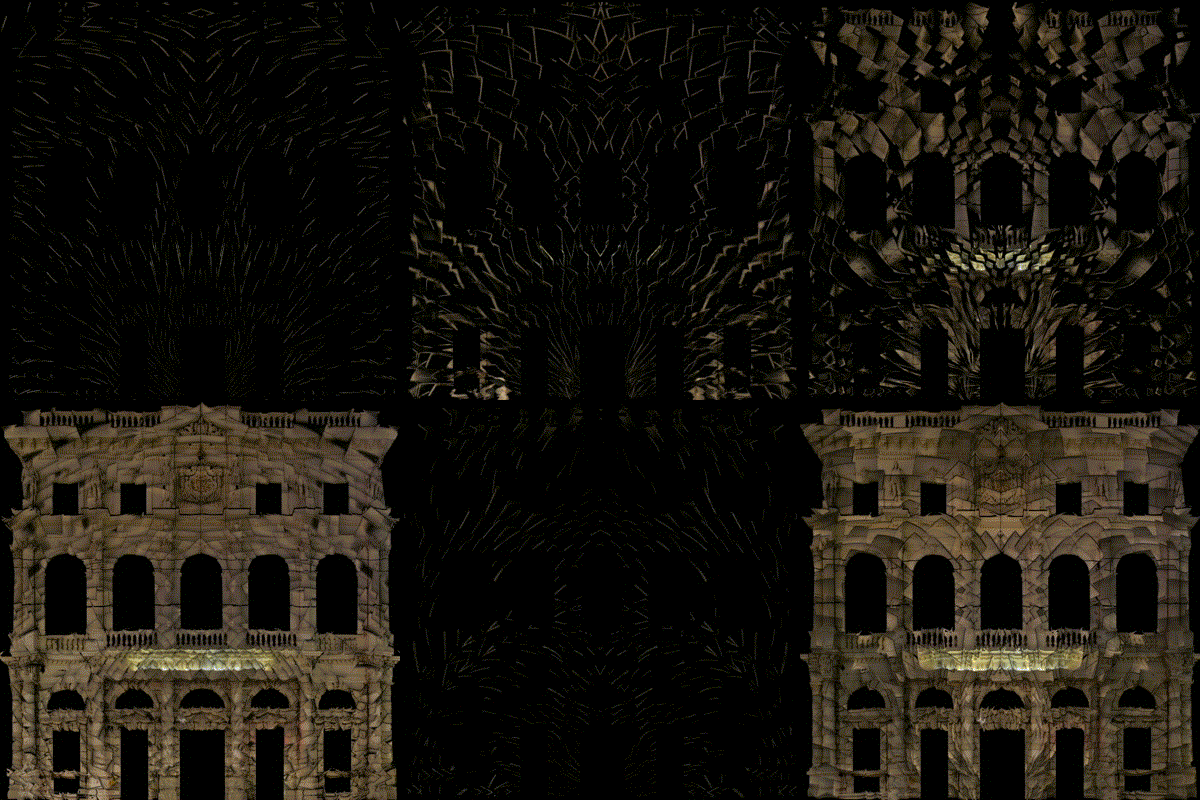
Additional historical examples and related literature in relation to projection mapping can be found in the following link.
The Illustrated History of Projection Mapping - Projection Mapping...